The Shennong Bencao Jing (Divine Farmer's Classic of Materia Medica) honors ginseng as the "King of Herbs." With its sweet, slightly bitter taste and mildly warming properties, ginseng has long been regarded as a premium traditional tonic. It is traditionally believed to replenish vital energy, restore the pulse, calm the mind, enhance cognitive function, support lung function, promote fluid production, and nourish the blood. Throughout history, traditional Chinese medicine practitioners have used ginseng in various applications, including addressing cold limbs, weak pulses, poor appetite associated with spleen deficiency, and coughing or wheezing associated with lung deficiency. Modern research has also investigated its potential role in regulating immune function. This rich traditional heritage and its distinctive properties have given ginseng renewed value in modern healthcare.
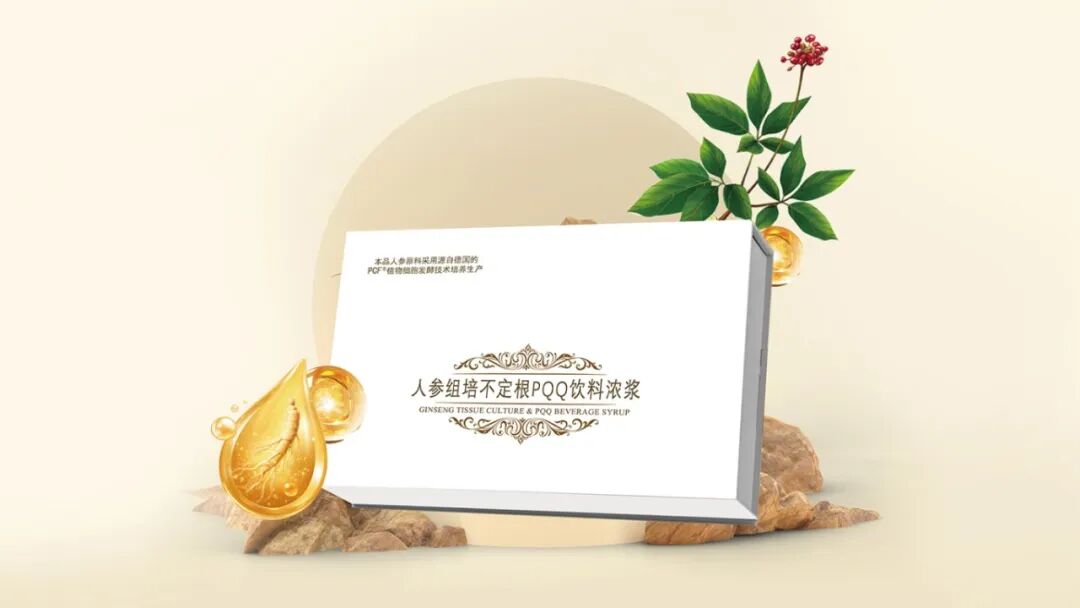
To meet growing market demand and address existing industry challenges, Langou Phyton has officially introduced a groundbreaking product, PCF® Tissue-Cultured Ginseng Adventitious Root PQQ Concentrated Beverage, powered by its globally leading PCF® (Plant Cell Fermentation) technology. By leveraging the unique advantages of PCF® technology, this innovative product aims to address key market challenges through four distinctive features, ushering in a new era of efficient ginseng utilization.
Feature One
Ingredients Produced Using PCF® Technology
The ginseng tissue-cultured adventitious root extract is produced using globally leading PCF® technology. High-quality wild ginseng cells are selected and cultivated in vitro under sterile conditions with controlled temperature, pH levels, and nutrient availability. Through shaking culture and successive subculturing, the cells proliferate before undergoing extraction and purification to obtain high-quality cell fermentation products.
Compared with naturally grown or conventionally cultivated ginseng, PCF® tissue-cultured ginseng adventitious root extract is described as offering higher quality, greater biological activity, environmentally friendly and pollution-free production, and better cost-effectiveness. Furthermore, the purification process removes certain impurities, which is intended to reduce the traditional concern of excessive internal heat associated with consuming ginseng.
Feature Two
Total Ginsenoside Content Within the Optimal Dose-Response Range
According to the nutritional literature cited in the original article, a daily intake of 170–580 mg is associated with potential supportive effects on immune function, antitumor activity, and cardiovascular and cerebrovascular health. The article states that intakes below this range may have limited effectiveness, while higher intakes may increase the risk of adverse effects. Each 50 mL sachet of this product contains 200–500 mg of total ginsenosides, placing it within the cited optimal dose-response range.
Feature Three
Enriched with PQQ, a Prominent Nutritional Compound
PQQ, sometimes referred to as the "14th Vitamin", is known chemically as pyrroloquinoline quinone disodium salt. Its biological functions are primarily associated with two areas. First, research suggests that it may support mitochondrial growth and development and promote cellular growth. Second, PQQ exhibits antioxidant properties, which may help neutralize free radicals and reduce oxidative damage to cells. These properties have attracted research interest in its potential applications for brain health, cardiovascular health, and metabolic health.
Feature Four
Integrating Eastern and Western Approaches, Tradition and Modern Science
PCF® Tissue-Cultured Ginseng Adventitious Root PQQ Concentrated Beverage represents an innovative approach to the industrial production of traditional medicinal and edible botanical ingredients through advanced bioengineering technology. The formulation combines ginseng, traditionally known as the "King of Herbs," with PQQ, a compound studied in modern molecular biology.
As a redox cofactor, PQQ is being investigated for its potential role in mitochondrial function, ATP synthesis, and antioxidant activity. In combination with ginsenosides, it is intended to support cellular energy metabolism and immune regulation.
The formula also incorporates perilla, traditionally used to relieve exterior symptoms and dispel cold, and turmeric, traditionally associated with promoting blood circulation and the movement of qi. In addition, a scientifically formulated combination of three prebiotics—fructooligosaccharides, isomaltooligosaccharides, and inulin—is included to support intestinal microbial balance and provide multidimensional support for metabolic health.
Through this integrated approach, the product seeks to achieve a precise combination of traditional herbal wisdom and modern biotechnology at the cellular level.
References:
Zubair Ahmed Ratan, Mohammad Faisal Haidere, Yo Han Hong, Sang Hee Park, Jeong-Oog Lee, Jongsung Lee, Jae Youl Cho. Pharmacological Potential of Ginseng and Its Major Component Ginsenosides. Journal of Ginseng Research, 2021, 45(2): 199–210.
Shin, B.K. et al. (2015). "Dose-dependent effect of red ginseng on immune function in healthy adults: A randomized controlled trial." Journal of Ethnopharmacology, 166, 270–277.
Journal of Nanobiotechnology, 2025 Special Issue on Antitumor Research.
Chowanadisai, W., et al. (2010). "Pyrroloquinoline quinone stimulates mitochondrial biogenesis through cAMP response element-binding protein phosphorylation and increased PGC-1alpha expression." Journal of Biological Chemistry, 285(1), 142–152.
Harris, C.B., et al. (2013). "Dietary Pyrroloquinoline quinone (PQQ) alters indicators of inflammation and mitochondrial-related metabolism in human subjects." Journal of Nutritional Biochemistry, 24(12), 2076–2084.
Nakano, M., et al. (2015). "Effects of Pyrroloquinoline quinone on cognitive function and oxidative stress in a mouse model of Alzheimer's disease." Food & Function, 6(8), 2661–2670.
Yao Xiaofen et al. Research Progress on the Effects of Four Oligosaccharides and L-Arabinose on Intestinal Health. Journal of Hygiene Research, 2012, 41: 344–348.
Wu Shan et al. Functional Properties and Application Prospects of Inulin. Grain Quality and Safety, 2023, 1: 19–22, along with other relevant scientific publications.
Disclaimer: All statements regarding health benefits in this article refer to the properties of the individual ingredients rather than proven effects of the finished product. The information is provided for general reference only. Content published through this official account should not be cited as independent scientific evidence. Please refer to the original scientific literature for authoritative information. The operator of this official account shall not be held liable for any losses arising from the use of information contained in this article.