1) Plant Extraction
Paclitaxel content in wild Taxus is extremely low, only 0.06%-0.07% in bark. Taxus features an ultra-long growth cycle of 50–250 years. It takes 10 tons of bark from century-old trees to extract merely 1 kg of paclitaxel. Over-harvesting has pushed Taxus species to the brink of extinction, and Taxus has been listed as a Class I protected plant in China. Although artificial cultivation eases resource pressure, low paclitaxel content, high time and extraction costs, and environmental pollution during production severely restrict large-scale application.
2) Chemical Total Synthesis / Semi-Synthesis
Paclitaxel’s complex four-ring skeleton (with 11 stereocenters) makes total synthesis costly and cumbersome, and the construction of the oxirane ring remains a technical bottleneck. Semi-synthesis uses baccatin III or 10-DAB from Taxus as precursors and converts them via 4 chemical reactions with a yield up to 80%, yet it still relies on natural Taxus resources and involves complicated processes. Currently, total synthesis routes (e.g. the Holton route with an overall yield of only 2.7%) and semi-synthesis are hard to commercialize widely due to excessive costs and heavy consumption of bark or twigs.
3) Fermentation Production
Plant Cell Fermentation (PCF) technology reconstructs plant cell metabolic pathways to realize the industrial production of paclitaxel inside bioreactors. It represents the most advanced industrial pathway for paclitaxel manufacturing available today. The process requires no tree planting or felling, eliminates dependence on rare plants and breaks the constraint of Taxus’ long growth cycle. The production process is eco-friendly, stable, efficient and delivers highly standardized product quality.
Indicator | Traditional Bark Extraction | PCF Technology |
Raw Material Source | Taxus bark (requires tree felling) | Plant cells (lab-cultured) |
Production Cycle | 50 years (tree growth) + months for extraction | 75 days (cell cultivation) |
Paclitaxel Content | 0.01%-0.06% | 1‰-5‰ via metabolic engineering |
Environmental Impact | Severe (deforestation, soil erosion) | Minimal (no felling, low carbon emission) |
Cost | Extremely high (scarce raw material, complex process) | 50%-70% lower via mass production |
Sustainability | Unsustainable | Highly sustainable |
(Comparison between traditional bark extraction and PCF technology)
As a pioneer of plant cell fermentation technology, Phyton from the United States holds patents for PCF (Plant Cell Fermentation) technology. It is currently the world’s only enterprise capable of large-scale industrial production via plant cell fermentation, and also the globally leading supplier of high-quality anti-tumor APIs Paclitaxel and Docetaxel, holding nearly one-third of the global market share for high-end paclitaxel APIs.
Back in 1990, Phyton began researching large-scale asexual propagation for artificial cultivation of natural plant cells, and successfully extracted paclitaxel from plant cell cultures instead of harvesting rare, slow-growing Pacific yew trees.
In 1993, Phyton acquired a manufacturing plant in Ahrensburg, Germany and rebuilt it into the world’s largest GMP-compliant plant cell fermentation facility. Its fermenters reach a volume of 75,000 L. It exclusively supplies paclitaxel API produced under patented PCF® technology to Bristol Myers Squibb (BMS), one of the world’s top ten pharmaceutical firms. This API won the U.S. national award, the Presidential Green Chemistry Challenge Award.
By 2012, Phyton had grown into the world’s largest and only supplier of high-quality paclitaxel and docetaxel APIs via PCF® technology independent of Taxus cultivation.
In 2016,Phyton and Shenzhen Langou Pharmaceutical Group reached a strategic cooperation covering paclitaxel API sales in China and the development of notoginseng, ginkgo and other botanical projects with plant cell fermentation technology.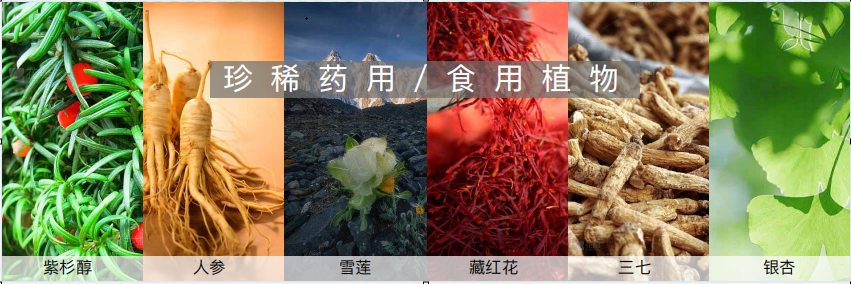
In 2021, Shenzhen Langou Pharmaceutical Group and Phyton jointly established the joint venture Langou Phyton (Jiangsu) Biopharmaceutical Co., Ltd. Rooted in global big-health demands and backed by world-leading PCF technology, Langou Phyton is committed to building the world’s most competitive super plant cell fermentation factory and becoming a global leader in green intelligent manufacturing.
Langou Phyton’s super plant cell fermentation factory covers approximately 200 mu and is equipped with twelve 75,000-L large fermenters, integrated with a pilot R&D center, intelligent fermentation workshops and purification & refining workshops. The factory enables closed-loop full-process production of paclitaxel and multiple rare medicinal botanical ingredients. One single fermentation workshop of Langou Phyton can reach an annual paclitaxel output of 1,500 kg, meeting around 50% of global API demand.
Langou Phyton’s super plant cell fermentation factory will replace traditional paclitaxel production routes with revolutionary technological strengths and superior productivity. Paclitaxel made via plant cell fermentation can keep 800 tons of chemical fertilizers and 200 tons of pesticides out of 56,000 hectares of land and groundwater each year, and protect 125 million artificially planted Taxus trees from logging, delivering remarkable environmental benefits.
Langou Phyton’s super plant cell factory not only resolves the resource bottleneck of paclitaxel production, but also marks a paradigm shift in pharmaceutical manufacturing from exploiting nature to biomimetic intelligent manufacturing. This technology is expected to bring anti-cancer drug prices down to an affordable level for ordinary patients while protecting endangered species and ecosystems.
As Jay Keasling, a pioneer in synthetic biology, put it: “The pharmaceutical factory of the future may no longer be a plant with smokestacks, but transparent bioreactors filled with cells.” This technological revolution of cells versus trees will ultimately help humanity fight cancer in a far more sustainable way.