(People's Daily Health Client, Liu Yingqi) The National Health Commission and the State Administration for Market Regulation recently issued a joint announcement adding nine substances, including Codonopsis pilosula, Astragalus, Ganoderma lucidum, and Gastrodia elata, to China's official list of substances traditionally used as both food and Chinese medicinal materials.
What does the expansion of this list mean? What guidance does it provide for consumers when purchasing and using traditional Chinese medicinal materials?
To answer these questions, People's Daily Health Client interviewed Chen Min, Chairman of the Professional Committee for the Evaluation and Utilization of Medicinal and Edible Substances under the China Association of Traditional Chinese Medicine; Yang Guang, Secretary-General of the Committee; and Zhang Wei, a researcher at the Institute of Chinese Materia Medica, China Academy of Chinese Medical Sciences.
People's Daily Health Client: What does the inclusion of these nine substances in the official list mean? How will it affect their daily sale and use?
Chen Min: The addition of these nine substances marks the first expansion of the list since the implementation of the Regulations on the Administration of the List of Substances Traditionally Used as Both Food and Chinese Medicinal Materials in 2021.
This indicates that the expansion of China's list of medicinal and edible substances has entered a period of stable development. It also means that these nine substances can now be legally used in food production, sales, and consumption, representing a milestone in diversifying food sources and promoting the development of the health and wellness industry.
People's Daily Health Client: What guidance does the inclusion of these nine traditional Chinese medicinal materials provide for consumers when purchasing and consuming them?
Yang Guang: China manages ingredients traditionally used as both food and medicine through an official listing system. The inclusion of these nine medicinal materials is only the beginning.
Moving forward, professional technical personnel and regulatory authorities need to strengthen public education and training. Enterprises and research institutions should continue developing higher-quality medicinal and edible products to improve the health benefits available to the public.
For consumers, it is advisable to gain a basic understanding of traditional Chinese medicine and health maintenance practices, use medicinal and edible substances appropriately, and purchase products from clearly identified sources with complete labeling.
People's Daily Health Client: Previously, a postpartum care center was fined for adding Codonopsis pilosula to chicken soup prepared for new mothers. Does its official inclusion in the list mean that such practices will now comply with regulations?
Zhang Wei: According to traditional Chinese medicine theory, women recovering from childbirth often experience deficiencies in qi and blood. The appropriate use of medicinal diets containing Codonopsis pilosula may help replenish qi, nourish the blood, and support postpartum recovery.
This approach is consistent with traditional Chinese medicine principles of health maintenance and falls within the category of medicinal dietary therapy. However, ingredients used in medicinal diets must comply with the relevant provisions of the Food Safety Law of the People's Republic of China.
The inclusion of these nine medicinal materials in the official list indicates that they can now be legally used as ingredients in medicinal diets, meaning that the previously described situation should no longer occur under the same circumstances.
People's Daily Health Client: Does inclusion in the official list mean that consumers can use these medicinal materials freely? What precautions should they take?
Chen Min: Inclusion in the official list provides a legal basis for the consumption of these substances. However, whether their consumption delivers the expected health benefits is a scientific question that requires careful and rigorous evaluation.
I would like to offer three recommendations:
First, avoid excessive use of medicinal and edible substances. Excessive consumption of any substance may pose health risks. Even common dietary ingredients such as sugar, salt, and oil can be harmful when consumed in excess. Therefore, medicinal and edible substances should also be consumed in appropriate amounts and with moderation.
Second, acquire a basic understanding of traditional Chinese medicine and health maintenance. Consumers may refer to traditional consumption methods and practices that have a long history and are widely used.
Third, choose products from reliable and traceable sources. Consumers should select medicinal and edible products with clearly identified origins and reliable safety assurances, while strictly avoiding expired, spoiled, or deteriorated medicinal ingredients and related products.


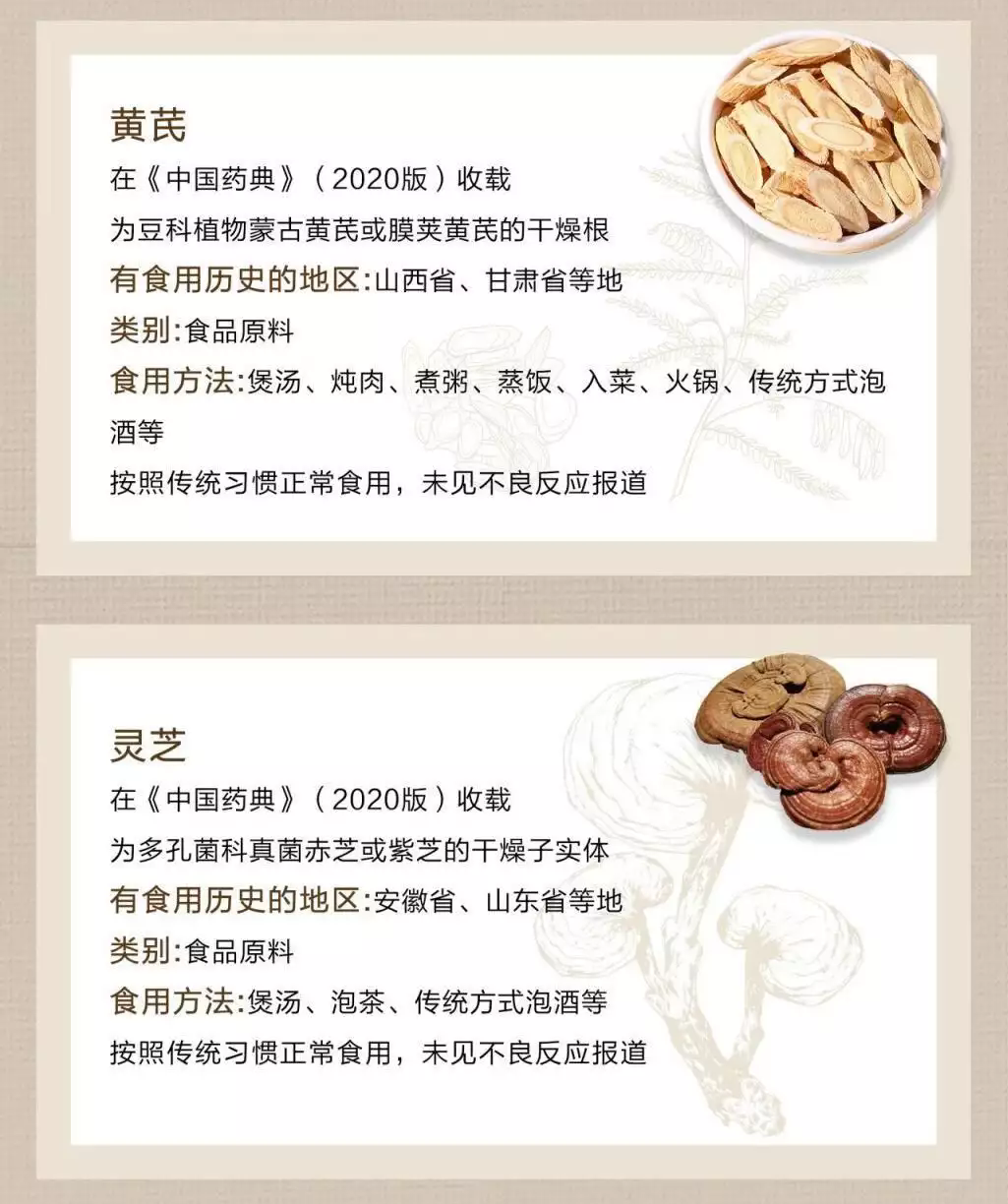
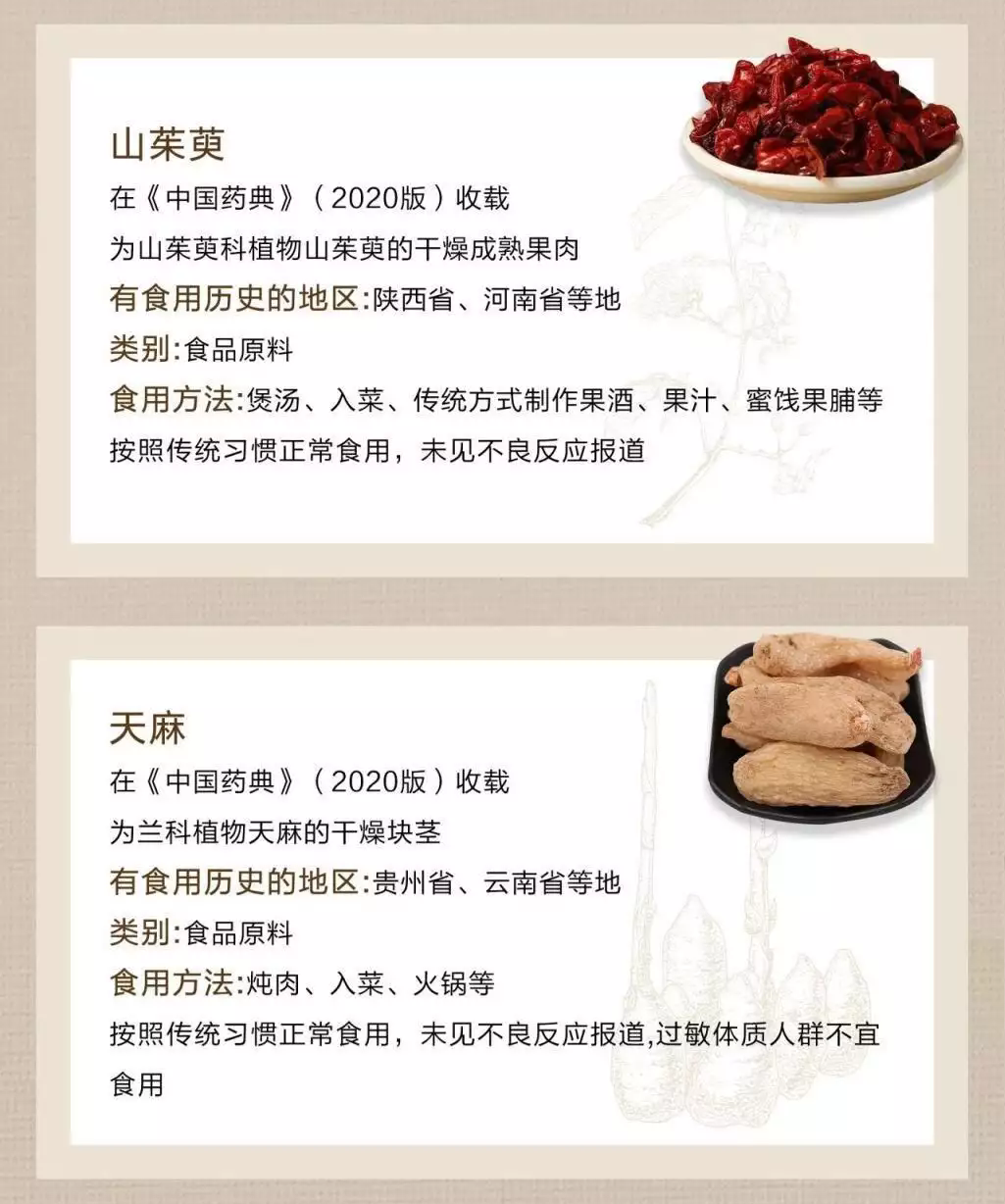
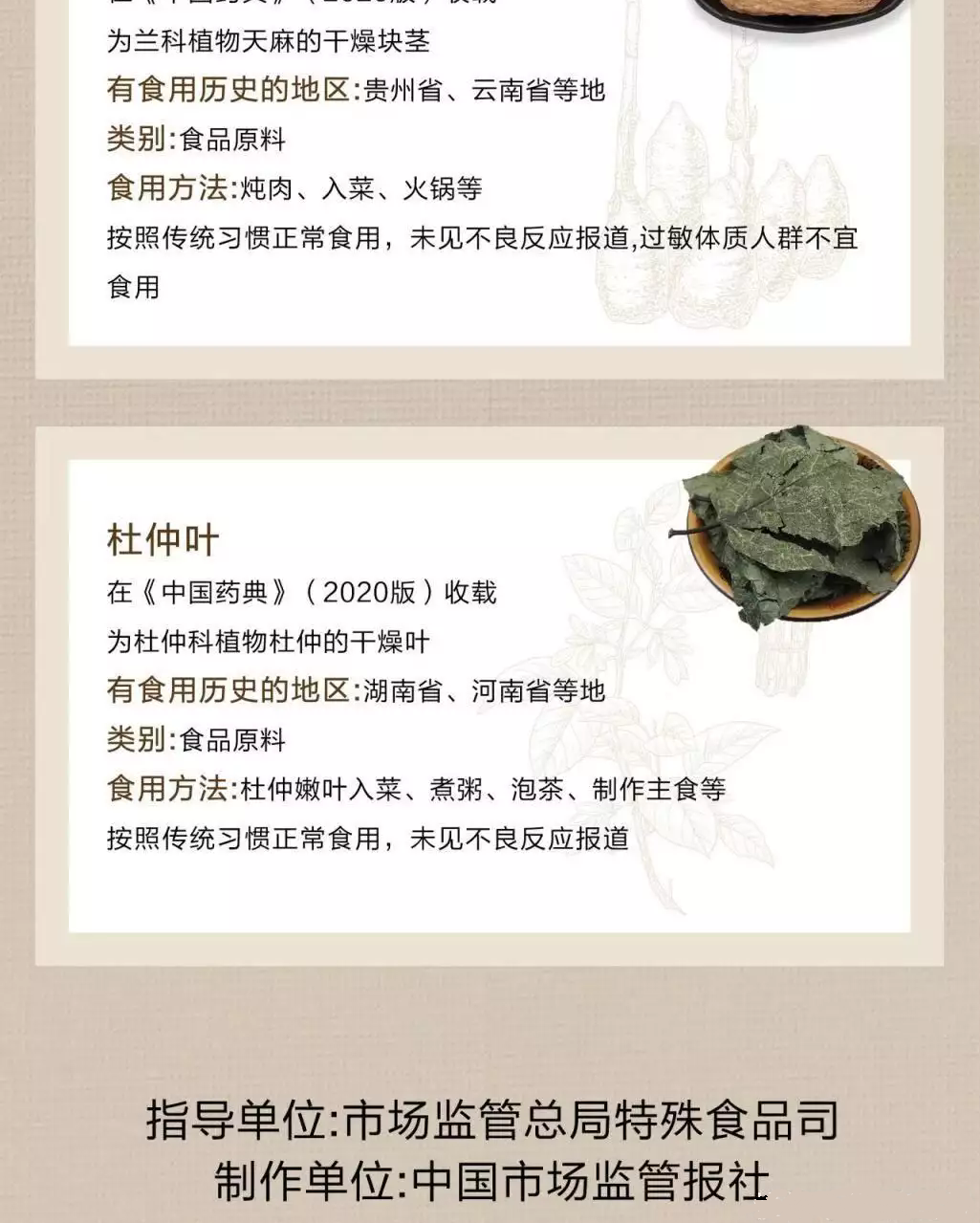
Images: Official WeChat Account of the State Administration for Market Regulation
Article Source:
Original Article on 360kuai
 People's Daily Health Client November 22, 2023, 16:34