PART 01 Introduction to PCF® Technology
PCF® (Plant Cell Fermentation) technology refers to a cultivation and production process in which callus tissue extracted from plants is placed in a liquid culture medium under in vitro conditions. Through shaking culture and multiple rounds of asexual subculturing, large populations of plant cells and raw materials rich in active ingredients can be obtained.
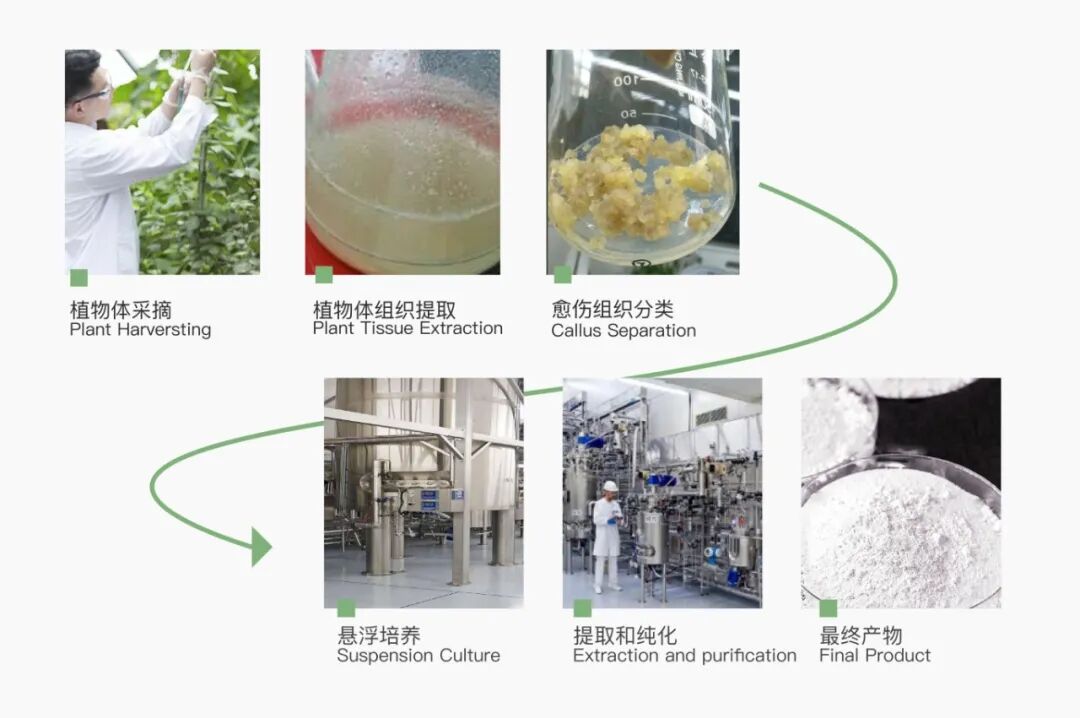
Successfully developed and industrialized by Germany's PHYTON company in the 1990s, PCF® technology has obtained patents in multiple countries across the Americas, Europe, and Asia. Combining the latest achievements in plant cell engineering and fermentation engineering, it has been hailed as "one of the four crown jewels of biotechnology over the next 20 years."
As a revolutionary high-tech innovation, PCF® technology fundamentally transforms the traditional methods of obtaining edible and medicinal plant resources through harvesting, cultivation, and extraction. It enables large-scale, industrialized, pollution-free, and highly efficient plant cell cultivation and production, significantly improving the utilization efficiency of valuable plant resources.
PART 02 Characteristics of PCF® Ginseng Ingredients
1. Superior Performance
By selecting high-quality callus cells from premium wild ginseng plants grown in their native habitats, particularly from superior root and rhizome tissues, PCF® technology enables controlled cultivation and production. Compared with ordinary naturally grown or artificially cultivated ginseng cells, the resulting ingredients are described as having stronger biological activity, better absorption, and superior overall performance.
2. Consistent Quality
Because ginseng cells undergo self-replication, asexual propagation, and successive subculturing, the quality of PCF®-produced ginseng ingredients remains consistent with that of the original high-quality source cells, regardless of production volume. This minimizes quality variations associated with differences in geographical origin, individual plants, and harvesting seasons.
3. Environmentally Friendly and Safe
PCF® production requires no chemical fertilizers or growth hormones. The production equipment is completely enclosed, helping prevent contamination from airborne pollutants and heavy metal ions in soil and water. It also eliminates the need for pesticides commonly used in conventional cultivation and avoids the chemical solvents typically employed in traditional plant extraction processes. These advantages contribute to greener, more environmentally friendly, and safer ginseng ingredient production.
PART 03 Sustainable Competitive Advantages
1. Efficiency Advantage
Through the industrialized production model enabled by PCF® technology, the production cycle of plant cell active ingredients can be shortened from several years or even decades under traditional wild or cultivated conditions to just a few weeks. Production efficiency for active ingredients can increase by more than 100 times.
2. Cost Advantage
With the completion and large-scale operation of the plant cell fermentation superfactory jointly established by PHYTON and Shenzhen Langou Group in Xuzhou, Jiangsu Province, overall production costs are expected to decrease to half or even a fraction of those associated with wild ginseng.
3. Stable Supply
Large-scale industrial production of ginseng ingredients using PCF® technology does not require extensive agricultural land and is not affected by climate conditions, pests, or plant diseases, significantly improving production stability and supply reliability.
4. Environmental Competitive Advantage
The fully enclosed PCF® production process eliminates pesticide residues associated with conventional agricultural production and aligns with global carbon neutrality trends. This environmentally responsible approach is particularly attractive to markets with stringent standards, including the European Union and North America.

PART 04 Reshaping the Market Through Disruptive Technology
1. Transforming the Raw Material Market
Taking ginseng cell production in a 75-ton fermentation tank as an example, the annual production capacity of a 1-cubic-meter fermentation tank is approximately equivalent to the output of 200 mu of traditional ginseng cultivation. Accordingly, the annual ginseng cell output of a 75-ton fermentation tank is approximately equivalent to that of 15,000 mu of conventionally cultivated land.
This revolutionary improvement in production efficiency directly addresses the core challenges of the traditional ginseng industry, including heavy dependence on agricultural land and long growth cycles, creating opportunities for exponential growth in raw material supply.
According to a special report by the China Commercial Industry Research Institute, China is the world's largest ginseng producer, accounting for approximately 70% of global production. Based on statistical yearbook data from Jilin, Liaoning, and Heilongjiang provinces, China's total ginseng production in 2024 was estimated at approximately 45,000 metric tons, with more than 95% originating from the three northeastern provinces. Jilin Province is particularly important as a major production center.
As forestry authorities in Jilin and other provinces strictly regulate the amount of land available for ginseng cultivation, the supply of ginseng may gradually stabilize.
According to a white paper on the ginseng industry published by New Nutrition magazine, using a growth period of 15 years as the standard for wild mountain ginseng, annual wild mountain ginseng production accounts for less than 3% of China's total ginseng output. The remainder consists primarily of artificially cultivated ginseng, which the report describes as generally inferior to wild mountain ginseng in quality and performance.
Depending on plant size and age, wild mountain ginseng can command prices several times to dozens of times higher than five-year-old cultivated ginseng. Large, mature wild specimens may be valued at more than 100 times the price of ordinary cultivated ginseng, resulting in persistent demand that exceeds supply.
With the commercialization of PCF® ginseng ingredients, these innovative raw materials are expected not only to partially meet market demand for wild mountain ginseng but also to capture a substantial share of the conventional cultivated ginseng ingredient market.
2. Transforming the Finished Product Market
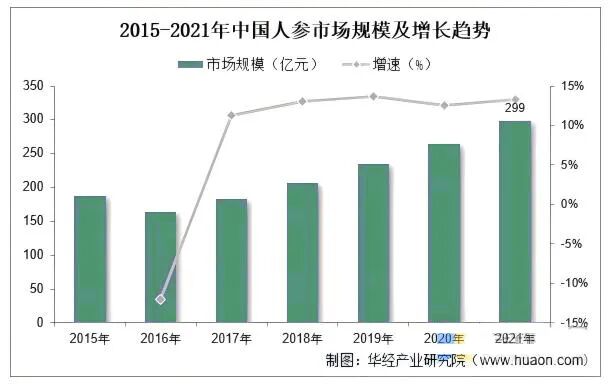
According to data from Huaon Intelligence Network, China's ginseng industry had a market size of approximately RMB 22 billion in 2019, accounting for about 42.0% of the global market.
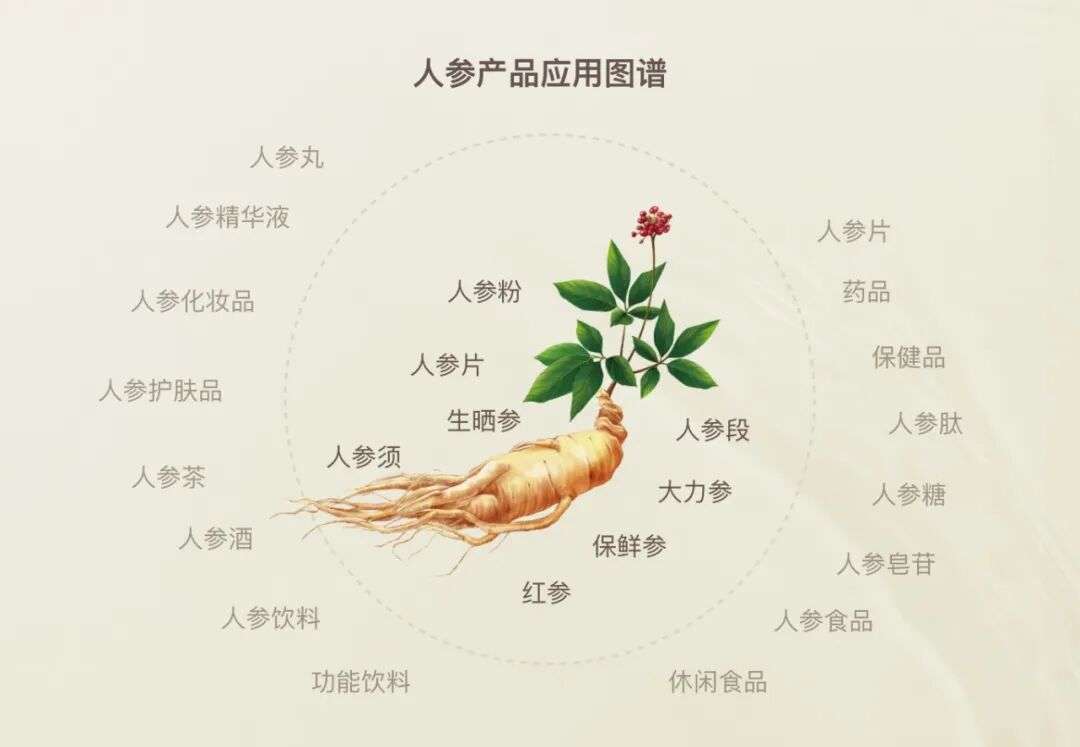
More than 1,000 types of ginseng products have been developed in China, mainly falling into the following categories:
(1) Primary Processed Products: Red ginseng, sun-dried ginseng, Dali ginseng, fresh-preserved ginseng, and other products.
(2) Pharmaceutical Products: Various compound pharmaceutical preparations containing ginseng and its major active ingredients.
(3) Nutritional and Health Products: Ginseng paste, ginseng tea, honey-coated ginseng slices, ginseng extracts, ginseng beverages, ginseng lozenges, ginseng soft capsules, ginseng coffee, and related products.
(4) Personal Care Products: Ginseng facial cleansers, ginseng facial masks, ginseng soaps, and other daily-use cosmetic products.
China's ginseng industry is characterized by "high production volume, relatively low output value, and weak brand recognition." Currently, primary processing remains dominant, and ginseng is mainly used as a traditional Chinese medicinal material.
Insufficient deep processing, low added value despite substantial production volumes, and underdeveloped downstream products and markets indicate significant growth potential for ginseng in pharmaceuticals, health and wellness, and personal care.
As the market for PCF® ginseng ingredients continues to expand, more nutritional products, health supplements, cosmetics, and personal care products containing ginseng and its active compounds are expected to emerge. Advanced biotechnology will continue to redefine this traditional medicinal plant, broaden its applications, and enhance its brand value.
PART 05 Rapid Growth in Market Demand
1. Expansion of the Health Supplement Market
As the world's second-largest health supplement market, China recorded a market size of 825,000 metric tons in 2023, according to the original source. Demand for ginseng-based products continues to increase due to their potential applications in cardiovascular health and neurological regulation. PCF® technology enables targeted enhancement of ginsenoside content, meeting the development requirements of high-value-added health products.
Market Size Trend of Functional Foods, Health Supplements, and Nutritional Products in China (2015–2022)
Source: China Industry Information Network
2. Pharmaceutical and Medical Aesthetics Applications
High-purity, low-contamination PCF® ginseng ingredients are better suited to cGMP standards and offer potential applications in injectable pharmaceutical products and medical aesthetics formulations, creating significant opportunities for premium market positioning.
3. Opportunities in the Cosmetics Market
Cosmetics and premium skincare products formulated with ginseng are valued for their potential benefits in enhancing cellular vitality, supporting metabolism, delaying visible signs of aging, and regulating melanin production. Ginseng-based cosmetics have gained a favorable reputation and remain popular in the skincare market.
PART 06 Emerging Growth: Functional Foods Based on Rare Ginsenosides
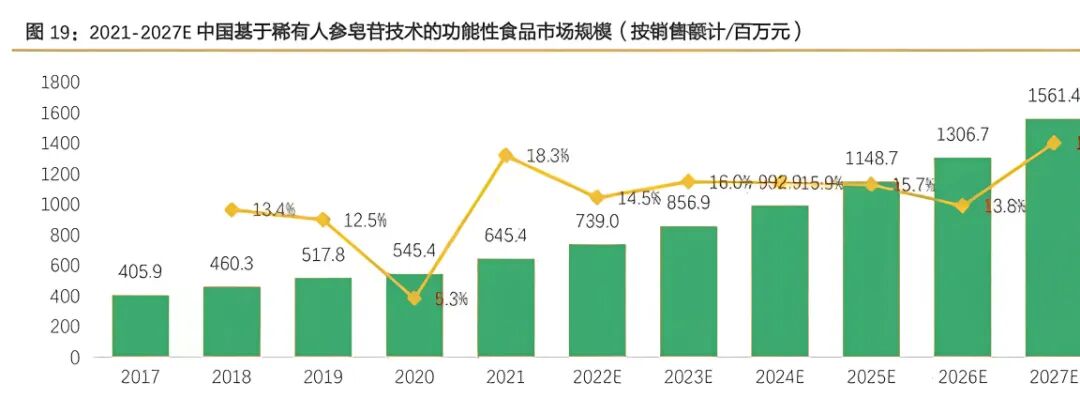
Functional foods formulated with rare ginsenoside ingredients are emerging as a rapidly growing market segment. In China, these products are growing at nearly twice the average growth rate of other ginseng-based products, and their growth rate is also more than double that of general functional foods.
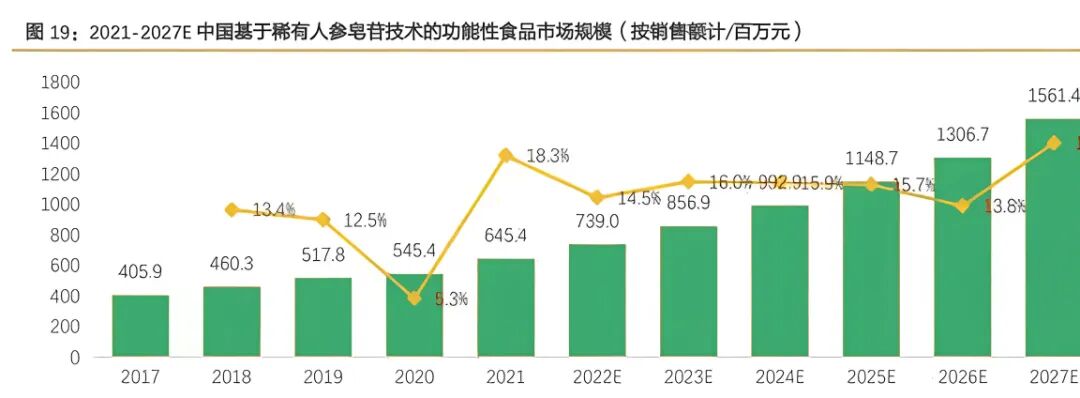
Source: Huaon Intelligence Network
The large-scale, industrialized, high-quality, and highly efficient production of ginseng cell ingredients enabled by PCF® technology will provide a stable supply of rare ginsenosides, supporting the continued growth of this expanding market segment.
PART 07 Future Outlook
With the deep integration of synthetic biology and AI-driven process optimization technologies, PCF® ginseng ingredients are expected to capture 30% of the premium market within five years. This development could also accelerate the transformation of traditional ginseng cultivation toward a hybrid model combining "Cell Banks + Ecological Cultivation," creating a new biotechnology-driven intelligent manufacturing ecosystem with a potential market value reaching hundreds of billions of yuan.

Selected References:
1. PCF® Technology: A New Quality Productive Force in Biotechnology and Intelligent Manufacturing – China.com (Mobile).
2. Ginseng Industry – People's Government of Jilin Province.
3. Plant Cell Fermentation (PCF®) Technology: Six Core Technological Advantages – EqualOcean.
4. Report on the Current Status and Development Prospects of the Ginseng Market, 2022–2026 – Sohu.
5. Ginseng Market Research Report, 2022–2026 – Sohu.
6. Report on the Current Status and Development Prospects of the Ginseng Market, 2022–2026 – Sohu News.
7. PCF Technology: A New Quality Productive Force in Biotechnology and Intelligent Manufacturing – Sina News.